
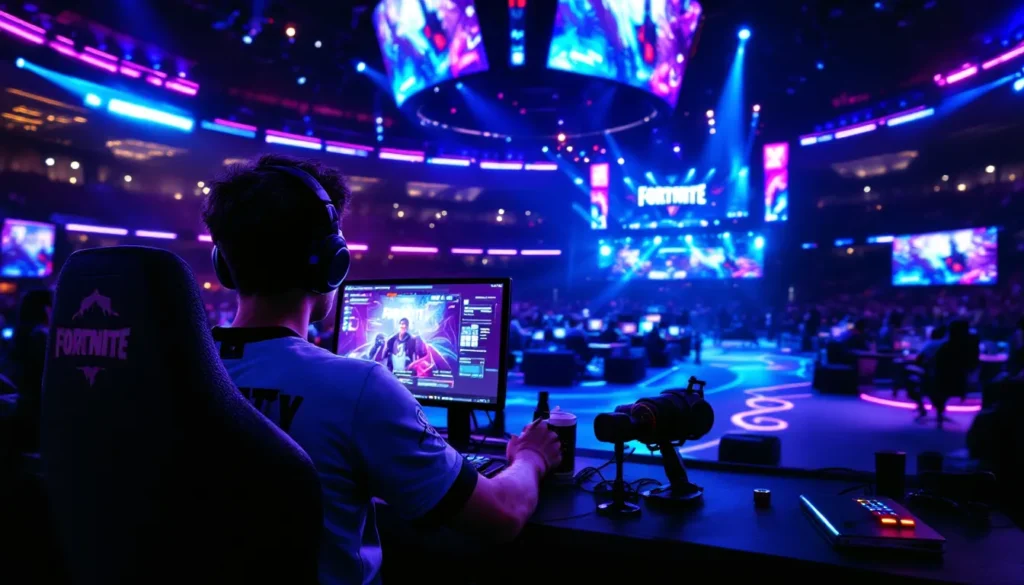
When Epic Games launched Fortnite in 2017, nobody predicted it would become one of the most lucrative competitive gaming scenes in history. What started as a free-to-play battle royale with quirky building mechanics has evolved into a global phenomenon with prize pools that dwarf traditional sports championships. In 2019, a 16-year-old walked away with $3 million from a single tournament, more than what most traditional athletes earn in an entire career.
But competitive Fortnite isn’t just about the money. It’s a test of mechanical skill, strategic thinking, and mental endurance unlike anything else in esports. The constant evolution of weapons, items, and map changes means the meta shifts every few weeks. One season you’re rotating through launch pads and shockwave grenades: the next, you’re adapting to entirely new mobility options.
Whether you’re grinding Arena Mode hoping for a shot at FNCS or just curious about how the competitive scene works, this guide breaks down everything you need to know about Fortnite esports in 2026, from tournament formats and qualification paths to the skills that separate casual players from championship contenders.
Key Takeaways
- Fortnite esports has generated hundreds of millions in prize pools since 2018, with the 2019 World Cup distributing $30 million and top earners like Bugha securing over $3.7 million in competitive winnings.
- The Fortnite Champion Series (FNCS) serves as the flagship competitive circuit, featuring open qualifiers accessible to any player who reaches Champion League in Arena Mode, making professional competition achievable without sponsorships.
- Competitive Fortnite demands mastery of building mechanics, positioning strategy, and game sense that separates casual players from championship contenders—with professional players dedicating 6-10 hours daily to structured practice.
- The competitive landscape differs dramatically from casual play due to stacked endgames with 30-40 players, storm surge mechanics, and resource scarcity that prioritize both survival and strategic decision-making.
- Revenue in Fortnite esports extends beyond tournament winnings to include streaming income, sponsorships, creator codes, and organizational salaries, making content creation and personal branding essential for long-term player sustainability.
- Epic Games maintains complete control over competitive formats, meta shifts, and prize pools, creating both financial stability and uncertainty—as demonstrated by the absence of a World Cup event since 2019 despite ongoing FNCS seasons.
What Is Fortnite Esports?
Fortnite esports represents the competitive side of Epic Games’ battle royale juggernaut. Unlike traditional esports titles with established structures from the start, Fortnite’s competitive scene emerged organically as players began hosting their own scrims and Epic recognized the potential.
At its core, Fortnite esports involves players or teams competing in battle royale matches where placement and eliminations determine scoring. The competitive ecosystem includes official Epic-sponsored events like the Fortnite Champion Series, third-party tournaments, and region-specific competitions across North America, Europe, Brazil, Asia, Middle East, and Oceania.
What sets Fortnite apart is its accessibility. Anyone with a decent internet connection can enter qualifiers, regardless of sponsorships or team affiliations. This open format has created Cinderella stories where unknown players rise to prominence overnight.
How Competitive Fortnite Differs from Casual Play
The gap between pub stomping and competitive play is massive. In casual matches, you might face a handful of competent builders. In competitive lobbies, everyone can crank 90s, edit through builds in milliseconds, and laser you from 150 meters with an AR.
Competitive matches feature:
- Stacked endgames: 30-40 players alive in final circles instead of 5-10
- Advanced positioning: Understanding zone pull probability and optimal rotation paths
- Resource efficiency: Every mat counts when you’re fighting in moving zones
- Elimination caution: Taking unnecessary fights tanks placement points
- Storm surge damage: Forces engagement when too many players survive
The pacing feels completely different too. Competitive matches start slow as players prioritize looting and farming, then explode during mid-game rotations when teams contest chokepoints. Endgames become chaotic box-fighting scenarios with 20+ build structures collapsing simultaneously as zones force movement.
The Evolution of Fortnite’s Competitive Scene
Fortnite’s competitive journey has been anything but smooth. Early tournaments in 2018 featured inconsistent formats and questionable decision-making from Epic. Players competed in solo showdowns and limited-time modes that barely resembled what we’d recognize as organized competition today.
The 2019 World Cup changed everything. Epic committed $100 million to competitive Fortnite, hosting qualifiers across ten weeks and crowning champions in solos and duos. Bugha’s dominant solo victory became a watershed moment, proving teenagers could compete at the highest level and earn life-changing money.
Post-World Cup, Epic refined their approach with the Fortnite Champion Series (FNCS), establishing it as the flagship competitive circuit. Each chapter and season brings format adjustments, sometimes trios, sometimes duos, occasionally squads. Chapter 2 saw the introduction of consistent FNCS seasons with better prize distribution and clearer qualification paths.
By 2024-2026, competitive Fortnite had matured significantly. Epic implemented better competitive integrity measures, improved spectator modes, and created sustainable revenue streams for professional players beyond just tournament winnings. The scene still faces criticism for frequent meta changes and controversial items in competitive pools, but the infrastructure supporting professional play is stronger than ever.
Major Fortnite Esports Tournaments and Events
The competitive calendar follows Fortnite’s seasonal structure, with major events anchoring each competitive season. Understanding the tournament hierarchy is crucial for anyone looking to break into the scene.
Fortnite Champion Series (FNCS)
FNCS is the bread and butter of competitive Fortnite. Running multiple times per year aligned with Fortnite’s seasonal updates, it’s the most prestigious regular competition with the clearest path from open qualifiers to grand finals.
FNCS structure (as of 2026):
- Open Qualifiers: Anyone can compete through Arena Mode rankings
- Heats/Qualifiers: Top-ranked teams advance to regional heats
- Semi-Finals: Best performers qualify for finals
- Grand Finals: Regional champions compete for massive prize pools
- Global Championship: Top teams from each region face off
Prize pools for FNCS typically range from $3-5 million per season globally, distributed across regions. The format alternates between duos, trios, and squads depending on Epic’s vision for each season. The FNCS Invitational and Global Championship events feature the highest-tier competition with players many consider among the global esports elite.
FNCS has become the proving ground where reputations are made. Consistency across multiple seasons matters more than one-off performances, players like Mero, Bugha, and Anas have dominated multiple FNCS events, cementing their legendary status.
Fortnite World Cup and Major Invitational Events
The 2019 Fortnite World Cup remains the most iconic event in the game’s competitive history. Held at Arthur Ashe Stadium in New York, it featured a $30 million prize pool, the largest single-event prize pool in esports history at the time.
Bugha’s solo championship win earned him $3 million, while duo champions Nyhrox and Aqua split another $3 million. The event drew 19,000 in-person spectators and millions of online viewers, proving battle royale could work as spectator entertainment even though inherent viewing challenges.
Epic hasn’t hosted another World Cup since, partly due to COVID-19 and partly due to strategic shifts in their competitive approach. Instead, they’ve focused on consistent FNCS seasons and occasional invitational events:
- DreamHack events: Third-party partnerships featuring online and LAN competitions
- Creator Cups: Celebrity and content creator showmatches
- Platform-specific tournaments: Console Cup, Mobile Cup for platform-exclusive competition
- Cash Cups: Weekly smaller tournaments providing consistent earning opportunities
Rumors circulate each year about a potential World Cup return, but as of March 2026, Epic hasn’t committed to another flagship event of that scale.
Regional Competitions and Third-Party Tournaments
Beyond Epic’s official circuit, third-party organizations host community-driven competitions. These events provide additional earning opportunities and help develop regional talent pipelines.
Notable third-party tournaments:
- Elite Scrims and Practice Servers: Community-run practice lobbies where pros refine strategies
- Platform-specific leagues: Console-only and mobile tournaments with adapted formats
- Regional qualifiers: Smaller events feeding into larger international competitions
- Charity tournaments: High-profile showmatches benefiting various causes
These competitions matter because they keep the competitive ecosystem active between official FNCS seasons. Many successful competitive Fortnite esports teams recruit talent based on performances in these third-party events, using them as scouting grounds for future stars.
Tournament Formats and Qualification Systems
Understanding how competitive Fortnite actually works is essential whether you’re competing or spectating. The qualification path and scoring systems have evolved significantly since the early days.
Arena Mode and Competitive Ranking
Arena Mode serves as the gateway to competitive Fortnite. It’s a ranked playlist where players earn Hype points by placing well and getting eliminations. The division structure (as of Chapter 5, Season 2 in early 2026) includes:
- Open League I-III: Bronze through Silver equivalent (0-1,999 Hype)
- Contender League I-III: Gold through Platinum (2,000-5,999 Hype)
- Elite: Diamond equivalent (6,000-7,499 Hype)
- Champion League: 7,500+ Hype
- Unreal: Top-tier players above certain thresholds
Reaching Champion League is mandatory for entering most competitive tournaments. The bus fare system deducts Hype for poor performances, creating a skill-based filter. You can’t just grind your way up, you need to consistently place well or get eliminations.
Arena matches feature tournament-style settings: siphon on kill, increased farming rates, and storm surge to prevent excessive camping. The matchmaking prioritizes Hype rank, though queue times at Champion League can stretch several minutes as the system finds 100 similarly-skilled players.
Open Qualifiers and Path to Pro
The beauty of Fortnite’s competitive system is its openness. Unlike franchised leagues in other esports, you don’t need organizational backing to compete at the highest level.
Typical qualification path:
- Reach Champion League in Arena Mode (7,500+ Hype)
- Register for FNCS qualifiers through Epic’s tournament portal
- Compete in qualifier sessions (usually three per round)
- Accumulate points across multiple sessions
- Advance based on cumulative performance to next round
Most FNCS seasons feature multiple qualification rounds spread over several weeks. The system rewards consistency, having one amazing session and two average ones usually beats having three mediocre sessions.
Epic staggers qualifier timing across regions to accommodate different time zones. NA East runs different session windows than EU or OCE, though overlap exists for players willing to compete on higher ping.
The path from unknown to professional takes months of dedicated practice, but it’s achievable. Players like Clix, Mero, and Deyy all broke into the scene as teenagers through sheer mechanical skill and tournament consistency, proving that understanding what makes successful esports games tick can translate to personal success.
Scoring Systems and Victory Conditions
Fortnite’s scoring system balances placement and eliminations, encouraging both survival and aggression. Standard competitive scoring (subject to tournament-specific adjustments):
Placement Points:
- Victory Royale: 30 points
- 2nd-3rd: 25 points
- 4th-5th: 20 points
- 6th-10th: 15 points
- 11th-15th: 10 points
- 16th-20th: 7 points
- 21st-25th: 5 points
- 26th-30th: 3 points
- 31st-40th: 2 points
- 41st-50th: 1 point
Elimination Points:
- 1 point per elimination in most formats
Tournaments typically consist of 6-12 games depending on the stage. Players/teams accumulate points across all games, with total points determining final standings. This format rewards consistency over hot-dropping and praying for a miracle game.
The scoring creates interesting strategic tension. Is it worth taking a 50/50 fight for an elimination point when you’re guaranteed top-10 placement? Should you play for the win or farm placement points? These decisions separate good competitors from great ones.
Top Fortnite Esports Players and Teams
The competitive scene has produced genuine superstars whose mechanical skill and game sense border on superhuman. These players don’t just win, they dominate.
Legendary Competitors and Their Achievements
Bugha remains the face of competitive Fortnite after his 2019 World Cup victory. Kyle Giersdorf’s ice-cold performance under pressure at Arthur Ashe Stadium cemented his legacy. He’s continued competing successfully in FNCS events, proving his win wasn’t a fluke. His ability to maintain composure in high-pressure situations is legendary.
Mero (formerly known as Mero) has been one of the most consistent performers in NA East. With multiple FNCS championship performances and millions in earnings, he’s proven that longevity at the top tier is possible. His mechanical skill and decision-making during endgame scenarios are textbook examples of competitive excellence.
Anas from EU is widely considered one of the best players globally. His performances in FNCS events and consistency across multiple seasons have earned him respect from competitors worldwide. EU is generally considered the most competitive region, making his dominance even more impressive.
Clix (Cody Conrod) built his reputation through aggressive play and insane mechanical skill. While he hasn’t achieved the same FNCS success as some peers, his influence on competitive Fortnite through content creation and tournament performances is undeniable. According to settings databases like ProSettings, Clix’s configuration and playstyle have influenced thousands of aspiring competitive players.
Setty emerged as one of the dominant forces in recent FNCS seasons, showcasing the new generation of talent constantly pushing mechanical skill ceilings higher.
Other notable names include Deyy, Reverse2k, Reet, Tayson, Th0mas, and Queasy, each bringing unique playstyles and achievements to the competitive landscape.
Leading Esports Organizations in Fortnite
While Fortnite doesn’t require organizational backing to compete, many elite players sign with established esports brands for salary, support, and exposure. The competitive Fortnite esports teams landscape includes both traditional organizations and newer entities.
Top organizations with Fortnite rosters:
- FaZe Clan: One of the largest gaming brands globally, FaZe has signed numerous top Fortnite competitors
- Team Liquid: Traditional esports org with a strong Fortnite presence across regions
- NRG Esports: Home to several championship-level players
- 100 Thieves: Though more focused on content, they’ve maintained competitive rosters
- G2 Esports: Strong EU presence with multiple top performers
- XSET: Newer org that quickly built a competitive Fortnite roster
The relationship between players and organizations in Fortnite differs from traditional team-based esports. Since most competitive formats involve solos, duos, or trios, organizations provide support rather than coordinating traditional team strategies. They offer salaries, handle sponsorships, provide coaching/analysis, and help with content creation infrastructure.
Many top players remain unsigned or join smaller organizations, preferring to maintain independence and avoid contract restrictions. The open tournament format means you don’t need an organizational badge to compete for championships, your skill speaks for itself.
Prize Pools and Earnings in Fortnite Esports
The money in competitive Fortnite is absurd by any standard. Epic Games has distributed hundreds of millions of dollars to players since launching competitive support in 2018.
Record-Breaking Payouts and Top Earners
Fortnite’s prize pool distribution dwarfs most traditional esports. The 2019 World Cup alone featured $30 million. Epic committed $100 million to competitive Fortnite that year, funding everything from weekly online tournaments to the flagship World Cup event.
Top earners in Fortnite esports history (as of March 2026):
- Kyle “Bugha” Giersdorf: Over $3.7 million in competitive earnings
- Arkhram, Falconer, rehx (2019 Trios winners): Each earned over $1.5 million
- Mero: Approximately $2+ million from FNCS and other events
- Anas: Over $1.8 million, primarily from EU FNCS dominance
- Clix: Over $1.5 million even though being too young to compete in early events
These figures only include tournament winnings, they don’t account for sponsorships, streaming revenue, or content creation income. Top players often earn more from Twitch subscriptions and YouTube ad revenue than from competitions.
FNCS seasons typically distribute $3-5 million globally, split across regions based on player population and competitive density. NA and EU receive the largest shares, while regions like OCE and Asia get smaller but still substantial prize pools.
Weekly Cash Cups and smaller tournaments provide consistent earning opportunities. A skilled player grinding daily can realistically earn $10,000-50,000 per year from smaller events alone, even without qualifying for major FNCS finals.
How Epic Games Funds Competitive Play
Epic’s funding approach differs from traditional esports models. Rather than relying on tournament entry fees or third-party sponsors, Epic directly funds the competitive ecosystem through Fortnite’s revenue.
The game generates billions annually through cosmetic sales, skins, emotes, battle passes, and collaborations. A portion of this revenue flows into competitive prize pools, creating a sustainable model that doesn’t depend on uncertain sponsorship deals or viewership metrics.
Epic’s competitive funding includes:
- FNCS seasonal prize pools: Guaranteed millions per season
- Cash Cups: Weekly smaller tournaments with $50,000-100,000 pools
- Platform-specific events: Separate prize pools for console, mobile, etc.
- Creator support: Support-a-Creator program that benefits content creators
- Third-party partnerships: Working with DreamHack and others for additional events
This direct funding model has pros and cons. On the positive side, it ensures financial stability regardless of viewership fluctuations. Players know prizes will be paid and tournaments will happen. The downside is that Epic maintains complete control over competitive formats, eligible items, and rule changes, sometimes implementing controversial decisions that affect professional players’ livelihoods.
Some in the community criticize Epic for not hosting another World Cup-scale event since 2019, arguing that the distributed FNCS model lacks the prestige and marketing impact of a flagship championship. Others appreciate the consistent earning opportunities FNCS provides versus banking everything on a single annual event.
Essential Skills and Strategies for Competitive Fortnite
Competing at a high level requires mastering mechanics that barely matter in casual play. The skill ceiling is stratospheric, and it keeps rising as players push what’s possible.
Building and Editing Mechanics
Building is Fortnite’s defining competitive mechanic. It’s not just about throwing up walls, it’s about doing it faster and more efficiently than your opponent while maintaining awareness of positioning and resources.
Core building skills:
- 90s and ramp rushes: Vertical mobility for claiming height advantage
- Tunneling: Creating protected pathways during rotations
- Box fighting: Close-quarters building exchanges in confined spaces
- Retakes: Regaining height when someone builds above you
- Cone protection: Preventing opponents from editing into your space
Editing speed separates average from elite players. Top competitors can perform triple edits in under a second, editing a wall, floor, and cone to create an angle, take a shot, and reset before opponents react.
The meta constantly evolves as players discover new techniques. What was cutting-edge six months ago becomes standard practice as creative mode warriors grind mechanics for hours daily. Players spend significant time in creative maps specifically designed for building and editing practice, often dedicating more hours to mechanical training than actual matches.
Positioning, Rotation, and Game Sense
Mechanics get you in the door, but game sense wins championships. Understanding zones, rotation paths, and when to fight versus when to disengage determines consistent placements.
Key strategic concepts:
- Zone pull prediction: Anticipating next circle locations based on current zone geometry
- Low-ground vs. height advantage: Knowing when each is advantageous
- Third-party awareness: Recognizing when fights will draw unwanted attention
- Storm surge management: Maintaining sufficient damage to avoid chip damage
- Endgame positioning: Securing box locations before final circles collapse
Rotation timing matters enormously. Rotating too early means fighting for position against multiple teams. Too late and you’re caught in storm or forced through contested chokepoints. Elite players track how many opponents remain alive, predict where teams likely landed, and calculate optimal rotation windows.
The chaos of 30-player endgames requires supernatural composure. You’re tracking multiple box layers, listening for edits, monitoring your health/shields/mats, watching zone timer, and processing combat information simultaneously. Players who maintain clarity under this pressure consistently outplace more mechanically gifted but less composed competitors.
Loadout Optimization and Resource Management
Inventory management isn’t sexy, but it wins games. Your five item slots need to balance offensive capability, defensive utility, mobility, and healing.
Ideal competitive loadout structure (meta-dependent):
- AR or SMG: Primary weapon for poke damage and pressure
- Shotgun: Essential for close-range burst damage
- Mobility item: Shockwaves, grappler, rift-to-go, etc.
- Healing: Medkits, shield, or slurp items
- Utility/Second weapon: Sniper, explosives, or additional healing
Meta shifts dramatically change optimal loadouts. When Epic vaults or introduces weapons, competitive players scramble to optimize new item combinations. News sources covering professional builds like Dexerto frequently analyze how top players adapt their loadouts to seasonal changes.
Resource management extends beyond inventory to materials. Good players track material counts obsessively, knowing exactly how many builds they can make in endgame scenarios. Running out of mats during final circles essentially guarantees elimination.
Ammo conservation matters too, especially for limited-drop weapons. Spraying 200 AR rounds mid-game means struggling for ammo later when it actually matters. Elite players hit their shots efficiently, conserving ammunition for crucial moments.
How to Get Started in Fortnite Esports
Breaking into competitive Fortnite requires more than just being good at pubs. You need structured practice, the right teammates, and realistic expectations about progression timelines.
Training Routines and Practice Regimens
Professional players treat Fortnite like a job. They don’t just play, they practice specific skills systematically.
Daily training structure for aspiring competitors:
Warm-up (30-60 minutes):
- Aim training in Kovaak’s or Aim Lab
- Building/editing drills in creative maps
- Box fighting practice against similarly-skilled opponents
Skill development (1-2 hours):
- Edit course runs focusing on consistency
- Piece control exercises
- Retake drills and high-ground practice
- 1v1s or realistic fights in creative
Competitive practice (2-4 hours):
- Arena Mode grinding to maintain Champion League ranking
- Scrim participation in community practice servers
- VOD review of your own matches and top players’ gameplay
Tournament play (when available):
- Cash Cups and qualifier events for real competitive experience
The grind is real. Most top players log 6-10 hours daily, with peak periods around major tournaments seeing even longer sessions. But quality matters more than raw hours, focused practice on weak areas beats mindless pub stomping.
VOD review is criminally underrated. Recording your tournament sessions and analyzing decision-making, mechanical misplays, and positioning errors accelerates improvement dramatically. Watching how top players approach similar situations shows alternative approaches you might not have considered.
Finding Teammates and Building Chemistry
Since most competitive formats involve duos or trios, finding compatible teammates is critical. Skill matters, but communication and chemistry matter more.
Where to find teammates:
- Discord servers: LFG channels in competitive Fortnite communities
- Twitter: Many players use #FortniteCompetitive hashtags to find partners
- In-game encounters: Sometimes Arena Mode opponents become teammates
- Friend networks: Asking existing gaming friends if they know serious players
- Scrim communities: Elite practice servers where serious competitors congregate
When evaluating potential teammates, consider:
- Communication style: Do they make clear callouts without excessive comms?
- Mentality: Can they stay composed after bad games or mistakes?
- Availability: Do their practice schedules align with yours?
- Skill level: Are they similar enough to compete together effectively?
- Role compatibility: Do your playstyles complement each other?
Chemistry develops through repetition. Don’t expect perfect synergy immediately. The best teams practice together for months, developing shorthand communication and instinctive understanding of each other’s tendencies. Many competitors trying to apply principles that distinguish successful competitive games find that teamwork and coordination matter as much as individual mechanical prowess.
Trialing multiple potential teammates is normal. If chemistry doesn’t develop after a few weeks, it’s often better to move on than force a partnership that isn’t working.
Entering Your First Competitive Tournaments
Your first real tournament will be nerve-wracking. That’s normal. Here’s how to approach it:
Pre-tournament preparation:
- Ensure you meet requirements: Champion League ranking, 2FA enabled, correct region selected
- Test your setup: Verify your ping, FPS stability, and hardware performance
- Review format and scoring: Know exactly how points work and session timing
- Plan your sessions: Decide which qualifier windows you’ll compete in
- Set realistic goals: Top 50% finish for your first event is solid
During the tournament, focus on playing your game. Don’t try to emulate pro aggression if you’re naturally a placement-focused player. Consistency beats hero plays in battle royale scoring.
First tournament mindset:
- Accept that you’ll probably get destroyed by better players
- Focus on learning and gaining experience, not winning
- Review what went well and what didn’t after each session
- Don’t get tilted by bad RNG or unfortunate fights
- Celebrate small victories like reaching top 25 or getting eliminations on good players
Cash Cups provide excellent low-pressure tournament experience. They run weekly, feature smaller prize pools, and let you practice competitive mindset without the stakes of FNCS qualifiers. Grinding Cash Cups for several months before attempting FNCS qualification is a smart progression path.
The Business of Fortnite Esports
Competitive Fortnite exists in a unique space where tournament winnings represent just one revenue stream among many. The most successful players have diversified income that extends far beyond prize pools.
Sponsorships, Content Creation, and Revenue Streams
Top Fortnite competitors are entrepreneurs as much as athletes. They build personal brands that generate income through multiple channels.
Revenue streams for professional players:
- Tournament winnings: Prize pools from FNCS, Cash Cups, and third-party events
- Organizational salaries: Monthly payments from esports organizations
- Sponsorships: Peripheral companies, energy drinks, gaming gear brands
- Streaming revenue: Twitch subscriptions, donations, and ad revenue
- YouTube earnings: Ad revenue from tournament highlights and content
- Creator codes: Support-a-Creator program providing percentage of item shop purchases
- Coaching services: Private lessons or group coaching sessions
- Merchandise: Branded apparel and products for larger personalities
The balance varies by player. Someone like Bugha probably earns more from streaming and sponsorships than tournament winnings at this point. Meanwhile, players who prefer grinding tournaments over content creation might derive 80%+ of income from competitive earnings.
Sponsorship deals in Fortnite esports range from peripheral partnerships (mice, keyboards, headsets) to broader lifestyle brands. Energy drink companies, gaming chairs, and apparel brands all see value in associating with successful players. Deal structures vary, some pay flat monthly fees, others offer revenue share or product royalties.
The creator code system deserves special mention. Any player with 1,000+ followers can apply for a creator code. Fans who use that code when making in-game purchases generate a small percentage for the creator. Top personalities can earn thousands monthly just from creator code revenue.
The Role of Streaming in Professional Fortnite
Streaming has become almost mandatory for professional Fortnite players, even those who’d rather focus purely on competition. It builds fan bases, creates content opportunities, and provides stable income between tournaments.
Why top competitors stream:
- Consistent revenue: Subscriptions and donations provide monthly income stability
- Brand building: Streaming grows followings that attract sponsorships
- Organizational value: Teams want players who bring marketing value, not just results
- Community engagement: Connecting with fans increases support and recognition
- VOD creation: Stream footage becomes YouTube content with minimal extra work
The streaming landscape for competitive players differs from pure content creators. Viewers watch competitive streamers for high-level gameplay and strategic insights, not necessarily for entertainment or personality. Many successful competitive streamers maintain relatively serious tones focused on gameplay analysis rather than comedic personas.
Balancing streaming with competition creates challenges. Some players stream Arena grinds and scrims, providing transparency into their practice. Others keep competitive practice off-stream to avoid revealing strategies or mental approaches. Tournament streams generate massive viewership but expose decision-making to opponents.
Recent discussions on platforms like Dot Esports have highlighted how the streaming requirement can create burnout among competitive players who’d prefer to focus purely on improvement. The pressure to maintain consistent streaming schedules while practicing 6-10 hours daily for tournaments creates unsustainable workloads for some players.
The Future of Competitive Fortnite
Predicting Fortnite’s competitive future requires acknowledging both its incredible success and persistent challenges. The scene has proven more durable than skeptics expected, but questions remain about long-term sustainability.
Upcoming Changes and Meta Shifts
Epic’s philosophy of constant evolution keeps Fortnite fresh but creates competitive instability. Major updates often land mere days before tournaments, forcing players to adapt rapidly to new weapons, items, or mechanics.
Recent and upcoming competitive developments:
- Ranked mode improvements: Epic continues refining Arena Mode with better matchmaking and reward structures
- Competitive loot pool separation: Growing calls for stable competitive-specific weapon pools separate from casual modes
- LAN event returns: More in-person finals as infrastructure improves post-pandemic
- Regional circuit expansion: Investment in developing competitive scenes in underserved regions
- Spectator improvements: Better viewing experiences through improved camera work and UI overlays
The competitive community consistently requests Epic vault controversial items like overpowered weapons or excessive mobility options from competitive pools. Epic’s response has been inconsistent, sometimes they listen, sometimes they maintain unified loot pools across modes. This tension between casual fun and competitive integrity remains an ongoing negotiation.
Chapter transitions bring the most dramatic changes. When Epic launches a new chapter, the entire map, weapon pool, and sometimes core mechanics change. These resets level the playing field temporarily but frustrate players who’ve mastered existing mechanics.
Advances in areas like cloud gaming infrastructure could potentially expand competitive access by reducing hardware barriers, though latency concerns remain for high-level play.
Fortnite’s Place in the Broader Esports Ecosystem
Fortnite occupies a unique position in competitive gaming. It’s not a traditional esport, yet it’s generated more prize money than most established titles. Its long-term positioning depends on several factors:
Strengths supporting longevity:
- Massive player base: Millions of active players create a deep talent pool
- Financial backing: Epic’s direct funding provides stability
- Cross-platform accessibility: Compete on PC, console, or mobile
- Cultural relevance: Collaborations and cultural penetration keep Fortnite mainstream
- Accessible entry: Open qualifiers let anyone compete
Challenges threatening sustainability:
- Spectator experience: Battle royale remains difficult to watch and understand
- Meta instability: Frequent changes frustrate competitive players and organizations
- Player burnout: The grind and pressure create high turnover
- Organizational hesitation: Some esports orgs have reduced Fortnite investment
- Lack of franchising: No long-term security for players or organizations
Compared to established esports with developer support and structured leagues, League of Legends, Counter-Strike, Valorant, Fortnite operates on its own model. There are no franchised teams, no guaranteed league spots, no player unions. Everything depends on Epic’s continued financial commitment and vision.
The absence of another World Cup-scale event since 2019 concerns some community members. While FNCS provides consistent competition, the lack of a prestigious flagship championship may limit Fortnite’s cultural impact compared to events like League of Legends Worlds or The International for Dota 2.
That said, Fortnite’s competitive scene has proven remarkably resilient. Even though predictions of imminent death since 2019, it continues thriving with healthy prize pools and engaged competitors. The connection between competitive innovations and cutting-edge esports technology suggests room for continued growth as infrastructure improves.
As of 2026, competitive Fortnite appears stable for the foreseeable future. Whether it maintains its current position or gradually declines depends largely on Epic’s strategic decisions and their continued willingness to invest hundreds of millions in competitive support.
Conclusion
Fortnite esports has defied conventional wisdom about what competitive gaming should look like. It took a genre many considered un-spectatable, battle royale, and built a thriving ecosystem with hundreds of millions in prize money and thousands of professional competitors.
The path from casual player to competitive success is more accessible here than in almost any other esport. You don’t need organizational backing, expensive equipment, or connections. Just skill, determination, and the willingness to grind Arena Mode until your mechanics are sharp enough to compete with the best.
But make no mistake, the skill ceiling is absurdly high and climbing constantly. The players dominating FNCS finals aren’t just good. They’re operating at a mechanical and strategic level that takes years of dedicated practice to approach. If you’re serious about competing, accept that the journey will be long and sometimes frustrating.
The future of competitive Fortnite isn’t guaranteed. Epic could shift priorities, player interest could wane, or new titles could siphon competitive talent. But as of March 2026, the scene remains vibrant, the prize pools substantial, and the opportunities real for anyone willing to put in the work.
Whether you’re grinding for FNCS glory or just curious about how the competitive side works, Fortnite esports represents a fascinating experiment in democratizing competitive gaming. The next tournament champion might be reading this right now, or they might still be in middle school, just starting their Arena grind.
The only certainty is that whoever they are, they’ll have earned it through thousands of hours of building, editing, and fighting their way through the most mechanically demanding battle royale ever created.