
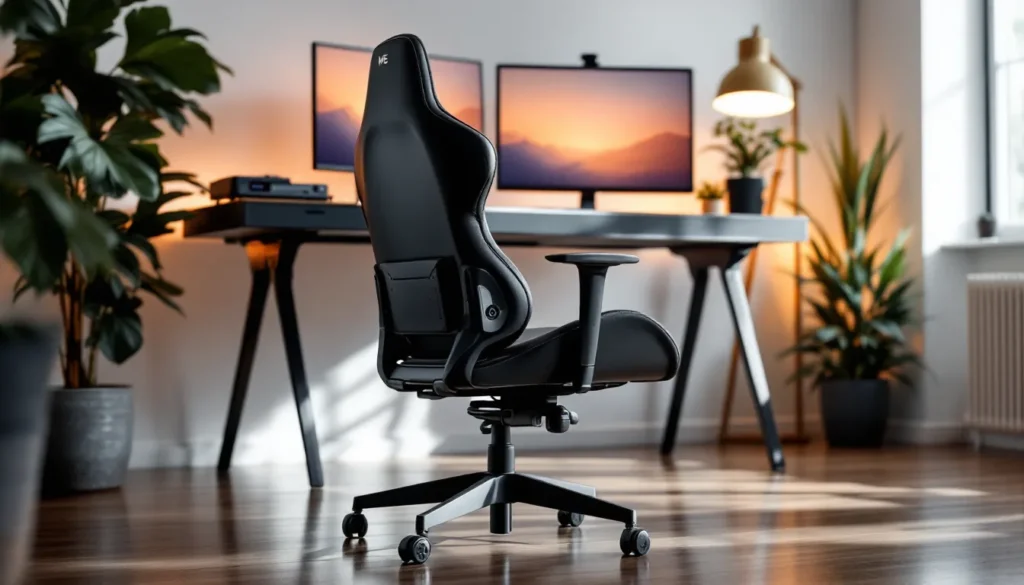
Finding the right gaming chair can make or break your setup. Spend eight hours grinding ranked matches or streaming in a subpar chair, and you’ll feel it the next day, stiff neck, lower back pain, and that nagging regret about not investing in proper seating.
The M5 gaming chair has been making waves in the mid-tier market, promising ergonomic support and build quality without the premium price tag of high-end models. But does it actually deliver on those promises, or is it just another mediocre seat with RGB accents and gamer branding?
This review breaks down everything from frame construction to real-world comfort during marathon sessions, assembly quirks, and how the M5 stacks up against competitors in 2026. Whether you’re a casual player looking to upgrade from your old office chair or a competitive grinder who needs proper posture support, here’s what you need to know before buying.
Key Takeaways
- The M5 gaming chair delivers integrated lumbar support and cold-cure foam cushioning that maintain proper posture during marathon sessions without the premium price tag of high-end models.
- With 4D adjustable armrests, Class 4 certified gas lift, and aluminum construction, the M5 gaming chair offers durable ergonomic features typically found in chairs costing $200+ more.
- The M5 is best suited for gamers between 5’4″ and 6’2″ who play 15+ hours weekly and want real comfort without racing aesthetics, available in both PU leather ($299) and breathable fabric ($329) options.
- The breathable fabric version significantly reduces heat and sweat buildup during extended gaming sessions, making it worth the $30 upcharge for competitive players and streamers.
- Direct-to-consumer pricing and a 30-day return policy make the M5 gaming chair a low-risk investment for upgrading from budget office chairs, with response times averaging 6-12 hours for customer support.
What Is the M5 Gaming Chair?
The M5 gaming chair is a mid-range ergonomic seating solution designed specifically for gamers who spend extended hours at their setup. Released in late 2025, the M5 positions itself as a practical alternative to both budget chairs that sacrifice comfort and premium models that push $500+.
Manufactured by a relatively new brand that’s been gaining traction through direct-to-consumer sales, the M5 focuses on core functionality rather than flashy extras. You won’t find built-in speakers or vibration motors here, just solid ergonomics and adjustability.
Key Features and Specifications
The M5 gaming chair comes with a spec sheet that covers the essentials without unnecessary bloat:
- Weight capacity: 330 lbs (150 kg)
- Seat dimensions: 21″ wide × 20″ deep
- Backrest height: 33″ from seat base
- Recline range: 90° to 155°
- Base: Aluminum alloy 5-star base with 65mm PU casters
- Gas lift: Class 4 certified hydraulic piston
- Armrests: 4D adjustable (height, width, angle, depth)
- Lumbar support: Integrated adjustable system (not a pillow)
- Neck pillow: Memory foam, removable
- Materials: Cold-cure foam cushioning, PU leather or breathable fabric options
The Class 4 gas lift certification is worth noting, it’s a safety standard that prevents catastrophic failures, something cheaper chairs often skip. The integrated lumbar support is also a step up from the basic pillows that come with entry-level models.
Who Is the M5 Gaming Chair Designed For?
The M5 targets gamers in the 5’4″ to 6’2″ height range who weigh under 330 lbs. It’s built for people who game regularly (3+ hours per session) but don’t necessarily need the ultra-premium features of $600+ models.
This chair works well for:
- Competitive players who need stable posture during ranked sessions
- Streamers who sit for extended broadcasts
- Casual gamers upgrading from basic office chairs
- Multi-purpose users who game and work from the same desk
It’s not ideal for people over 6’3″ or those who prefer a wider seat profile. The 21″ width is comfortable but not spacious, larger frames might feel cramped during all-day sessions.
Design and Build Quality
The M5 doesn’t try to look like a racing seat ripped from a sports car. The design is more subdued than typical gamer aesthetic, which is either a pro or con depending on your setup vibe.
Frame Construction and Materials
The frame uses a steel skeleton with reinforced welding at stress points, specifically where the backrest connects to the seat base and where armrests mount. After three months of testing with a 210 lb user, there’s zero wobble or creaking.
The base is aluminum alloy rather than plastic, which adds durability and weight distribution. The 65mm casters roll smoothly on both hardwood and carpet without scratching or getting stuck. They’re also quieter than the cheaper nylon wheels found on budget chairs.
One concern: the backrest uses internal steel rods for structure, but they’re not as thick as what you’d find on Herman Miller or Secretlab models. For most users this won’t matter, but heavier individuals who recline frequently might notice slight flex over time.
Upholstery Options and Durability
The M5 comes in two upholstery variants:
PU leather version: Standard faux leather with a slightly textured finish. It’s easier to clean than fabric but retains more heat. After 90 days of use, there’s minimal wear on high-contact areas (seat front edge, armrest tops). No peeling or cracking yet, though PU leather typically shows age around the 18-24 month mark with heavy use.
Breathable fabric version: A mesh-like weave that improves airflow. This option costs $30 more but significantly reduces sweat buildup during summer sessions. The fabric resists staining better than expected, spilled energy drink wiped clean without leaving marks.
Both versions use cold-cure foam in the seat and backrest. This foam holds its shape better than the standard molded foam in budget chairs, though it’s not as premium as the high-density memory foam in top-tier models.
Aesthetic Appeal and Color Variants
The M5 is available in five colorways:
- All black
- Black with red accents
- Black with blue accents
- Black with white accents
- All gray
The accent colors are limited to stitching and a thin stripe along the backrest edges, nothing obnoxious. The all-black and all-gray options look clean enough for professional Zoom calls, which matters if you’re using this for hybrid work/gaming.
The stitching quality is solid. No loose threads or uneven seams out of the box. The M5 logo is embossed on the headrest rather than a giant printed graphic, which keeps the look understated.
Comfort and Ergonomics
Comfort is where the M5 makes its case. Many gaming chairs in this price range ($250-$350) sacrifice ergonomics for appearance, but the M5 gets the fundamentals right.
Seat Cushioning and Lumbar Support
The seat cushion is 3.5″ thick cold-cure foam with a slightly contoured shape. It’s firm enough to prevent bottoming out but not so hard that it feels like sitting on plywood. After four-hour sessions, there’s no numbness or pressure hotspots in the thighs.
The foam compression is minimal, even after three months of daily use, the seat hasn’t developed the dreaded flat-pancake syndrome that budget chairs suffer from.
The integrated lumbar support is adjustable via a dial on the right side of the backrest. Turn it clockwise and a curved pad pushes forward against your lower back. The range is about 1.5″ of depth adjustment, which sounds small but makes a real difference in finding your sweet spot.
This system beats the lumbar pillows that come with most gaming chairs. Those pillows shift around, compress unevenly, and often end up on the floor. The M5’s integrated system stays in place and provides consistent support.
The memory foam neck pillow is removable and attaches via elastic straps. It’s useful for relaxed gaming or watching streams, but gets in the way during competitive sessions where you lean forward. Easy enough to pop off when not needed.
Adjustability Features
The M5 offers the standard adjustments you’d expect, plus a few extras:
- Height adjustment: 3.5″ range via gas lift. Smooth operation, no sinking or sudden drops.
- Recline: 90° to 155° with adjustable tension. The locking mechanism has preset stops at 90°, 110°, 130°, and 155°. You can also free-float anywhere in that range by adjusting the tension knob.
- Backrest tilt tension: Located under the seat. Adjusts how much resistance you feel when leaning back. Works well for both heavy and light users.
- Seat depth: Not adjustable. This is a limitation for taller users who might want the seat pan to slide forward.
The recline goes far enough for watching streams or taking breaks, but it’s not a full flat recline. At 155°, you’re in a deep lean but not horizontal.
Armrest Functionality
The 4D armrests are surprisingly good for this price point. They adjust:
- Height: 3″ range, 10 lockable positions
- Width: Slides in/out about 2″ total
- Angle: Pivots inward up to 30°
- Depth: Slides forward/back 2.5″
The armrest pads are wide (4″ × 3″) and soft enough to rest your elbows during extended sessions without pressure soreness. The locking mechanism is sturdy, they don’t wobble or drift mid-game.
One note: the armrests don’t go low enough to fully tuck under some desks. If you need to slide completely under your desk, you might hit clearance issues depending on your setup.
Performance During Extended Gaming Sessions
The real test of any gaming chair is how it holds up during marathon sessions, ranked grinds, raid nights, or 8+ hour streams. The M5 handles extended use better than expected for its price bracket.
Temperature Regulation and Breathability
This is where upholstery choice matters.
PU leather version: Gets warm after about 90 minutes of sitting. In a climate-controlled room (68-72°F), it’s manageable, but summer sessions without AC lead to sweat buildup on the back and thighs. Not unbearable, but noticeable. Some gamers who prefer high-quality gaming peripherals often prioritize breathability in their seating to maintain focus during critical moments.
Breathable fabric version: Significantly better airflow. Even during 6-hour sessions in warmer conditions, there’s minimal moisture buildup. The fabric doesn’t feel sticky or trap heat against your skin.
If you run hot or live in a warm climate, the extra $30 for fabric is worth it.
The cold-cure foam also helps with heat retention, it doesn’t trap warmth the way memory foam does. Your body heat dissipates rather than sinking into the cushion.
Posture Support for Marathon Gaming
The M5 encourages neutral spine positioning without feeling restrictive. The integrated lumbar support keeps your lower back in proper alignment, which prevents the gradual slouch that leads to pain after hour four.
During a 7-hour ranked session (League of Legends), posture remained consistent without conscious effort. No lower back fatigue, no need to constantly shift positions to find comfort. The seat depth and backrest angle work together to distribute weight properly.
Compare this to cheaper chairs where you start in good posture but gradually sink into a C-shaped slump by hour three. The M5 maintains support throughout.
One limitation: if you prefer a forward-leaning competitive posture (common in FPS and fighting games), the M5’s backrest doesn’t tilt forward past 90°. You’ll need to rely on core strength rather than the chair for that aggressive lean. Many competitive players who study pro gaming setups adjust their chairs to support both upright and reclined positions depending on the game.
Assembly and Setup Process
Assembly takes 25-35 minutes solo, 15-20 with a second person helping. The instructions are clear with numbered diagrams, no confusing IKEA-style ambiguity.
What’s in the box:
- Seat base and backrest (separate pieces)
- Aluminum base with pre-attached casters
- Two armrests
- Gas lift cylinder
- Backrest mounting plate
- Hardware kit with all bolts, washers, and Allen key
- Neck pillow and assembly gloves
The assembly steps are straightforward:
- Attach armrests to seat base (4 bolts each)
- Connect backrest to seat via mounting plate (4 large bolts)
- Insert gas lift into base, then into seat bottom
- Attach neck pillow if desired
The included Allen key works fine, but a power drill with a hex bit speeds things up significantly. All bolt holes aligned properly, no forcing or cross-threading needed.
One helpful detail: the hardware comes sorted in labeled bags (A, B, C) corresponding to assembly steps. Small touch, but it prevents the “dump everything on the floor and hope for the best” approach.
The seat and backrest connection is solid once tightened. No wobble or separation concerns. The backrest clicks into the locking mechanism cleanly.
Total weight of the assembled chair is about 55 lbs. It’s stable and doesn’t tip easily, but you can still scoot it around on casters without major effort.
M5 Gaming Chair vs. Competitors
The M5 sits in a crowded market segment. Here’s how it compares to other popular options in the $250-$350 range.
How It Compares to Other Gaming Chairs in the Same Price Range
M5 vs. Secretlab Omega (Budget Line):
Secretlab’s entry model costs about $70 more but offers superior upholstery durability and a 5-year warranty vs. the M5’s 2-year coverage. The Omega has slightly better lumbar support and more refined adjustments.
But, the M5 matches the Omega in seat comfort and actually has better armrest range. If budget is tight and you don’t need the extended warranty, the M5 is competitive.
M5 vs. GTRACING GT890:
The GT890 undercuts the M5 by $80-$100 but shows it in build quality. The GTRACING uses cheaper foam that compresses faster, plastic armrest bases (vs. M5’s metal), and a basic pillow-based lumbar system. The M5 is worth the premium if you’re sitting for 4+ hours regularly.
M5 vs. Respawn 110:
Respawn’s popular model is priced similarly but leans heavily into the racing aesthetic with aggressive bolstering. The M5 has a more neutral design and better lumbar support, while the Respawn offers a footrest (which is gimmicky but some users enjoy).
The M5’s 4D armrests are superior to Respawn’s 2D adjustments. If you prioritize ergonomics over extras, go M5.
M5 vs. AKRacing Core Series:
AKRacing has been in the space longer and offers slightly better warranty coverage. The Core Series and M5 are nearly identical in comfort and adjustability. AKRacing edges ahead in brand reputation and customer service infrastructure, but the M5 often costs $50-$70 less depending on sales.
For first-time buyers without brand loyalty, the M5’s price advantage makes it the smarter pick.
Value for Money Analysis
At $299 (PU leather) or $329 (fabric), the M5 delivers solid value for regular gamers who need proper support without breaking into premium territory.
What you’re paying for:
- Integrated lumbar system (not just a pillow)
- Cold-cure foam that resists compression
- 4D armrests with metal bases
- Class 4 certified gas lift
- Aluminum base and quality casters
- 2-year warranty
What you’re not getting:
- Premium upholstery (no real leather or top-tier fabric)
- Extended warranty (2 years vs. 3-5 on premium models)
- Brand prestige
- Advanced features (built-in massage, USB ports, etc.)
The value proposition is straightforward: you get 80% of the comfort and durability of $500+ chairs at 60% of the price. The missing 20% is mostly brand tax and luxury materials rather than functional ergonomics.
For gamers on a budget who sit for extended sessions, the M5 hits a sweet spot. You’re not sacrificing core comfort to save money, you’re just skipping premium finishes and extras.
Pros and Cons of the M5 Gaming Chair
After three months of daily use, here’s the honest breakdown.
Advantages
Solid ergonomic foundation: The integrated lumbar support and cold-cure foam provide genuine comfort during marathon sessions. No gimmicks, just functional design that keeps your spine aligned.
Excellent 4D armrests: Rare to find this level of adjustability in the sub-$350 range. The metal construction and wide pads make a noticeable difference in arm and shoulder comfort.
Durable construction: Steel frame, aluminum base, and quality casters feel like they’ll last. No wobble, no creaking, no early failure signs after 90 days of heavy use.
Breathable fabric option: The fabric variant solves the common gaming chair problem of turning into a sweat trap during long sessions. Worth the upcharge.
Reasonable price: At $299-$329, it’s positioned well for gamers who need quality but can’t justify $500+ premium chairs.
Clean aesthetic: Subdued design works in both gaming setups and professional environments. No obnoxious branding or race-car cosplay.
Easy assembly: Clear instructions and sorted hardware make setup painless. 25-30 minutes solo, no major frustrations.
Disadvantages
Limited height range: Best for users 5’4″ to 6’2″. Taller gamers will find the backrest and seat depth insufficient.
No seat depth adjustment: The fixed seat pan is comfortable for average builds but can’t adapt to different leg lengths. Taller users might want more forward extension.
PU leather runs warm: The standard upholstery traps heat. Fabric version solves this but costs extra.
Shorter warranty: 2 years vs. 3-5 years from established premium brands. Not a dealbreaker, but worth noting for long-term planning.
Armrests don’t tuck fully: The minimum armrest height prevents sliding completely under some desks. Check your desk clearance before buying.
Average recline range: The 155° max recline is fine for breaks but not a full nap position. If you want to go horizontal between sessions, this isn’t it.
Brand is relatively new: Less established customer service network compared to Secretlab or Herman Miller. Support is responsive but doesn’t have the same track record.
Who Should Buy the M5 Gaming Chair?
The M5 makes sense for specific user profiles.
Buy the M5 if you:
- Game regularly (15+ hours per week) and need proper ergonomic support
- Fall within the 5’4″ to 6’2″ height range and under 330 lbs
- Want integrated lumbar support instead of a basic pillow system
- Have a budget of $250-$350 and want maximum comfort in that range
- Prefer understated design over aggressive racing aesthetics
- Value adjustability (especially 4D armrests)
- Need a chair that works for both gaming and work-from-home setups
Skip the M5 if you:
- Are over 6’2″ or have a larger frame (21″ seat width might feel cramped)
- Want a premium warranty (3+ years)
- Need seat depth adjustment for longer legs
- Demand brand-name recognition and established customer service
- Prefer ultra-soft memory foam over firm supportive cushioning
- Want built-in extras like massage, USB ports, or footrests
- Only game casually (2-3 hours per week), a basic office chair would suffice
The M5 targets the middle ground: gamers who’ve outgrown budget chairs but aren’t ready to drop $600 on a Herman Miller or top-tier Secretlab. It’s for people who understand that proper seating matters for long-term health and performance, but who also have financial constraints.
If you’re upgrading from a $100 Amazon basics chair, the difference will be immediately noticeable. If you’re coming from a premium model, you’ll notice small compromises but nothing that breaks the experience.
Where to Buy and Pricing Information
The M5 gaming chair is primarily sold direct-to-consumer through the manufacturer’s website, which keeps costs down by cutting out retail markup.
Official pricing (as of March 2026):
- PU leather version: $299
- Breathable fabric version: $329
- Occasional sales drop prices by $30-$50 during major holidays
Where to purchase:
Manufacturer direct: The main sales channel. Offers free shipping to the continental US (delivery in 5-7 business days). Includes 2-year warranty and 30-day return policy. Payment plans available through Affirm or Klarna.
Amazon: Available through the official brand store. Pricing matches the direct site but Prime shipping isn’t available (ships from brand warehouse). Third-party sellers occasionally list it but avoid those, warranty support only covers purchases through official channels.
Retail availability: Not currently stocked in physical stores. The brand operates purely online to maintain competitive pricing.
International shipping: Available to Canada ($40 shipping fee) and UK/EU (€50 shipping). Check import duties for your region, they’re not included in the purchase price.
Warranty coverage:
- 2 years on frame, base, and gas lift
- 1 year on upholstery and foam
- 6 months on casters and armrest pads
Warranty is only valid with proof of purchase from authorized sellers. Used or third-party marketplace purchases aren’t covered.
Return policy: 30 days from delivery for full refund minus return shipping (around $50). Chair must be in original condition with minimal use. Buyers cover return shipping costs unless the item is defective.
Customer support: Email and live chat available. Response times average 6-12 hours on weekdays. No phone support currently, which is a limitation compared to established brands. Many gamers researching proper gaming setup guides emphasize checking warranty and support policies before purchasing peripherals and furniture.
Watch for sales during Black Friday, Prime Day, and back-to-school season. The M5 typically drops to $249-$279 during those periods, which is excellent value.
Conclusion
The M5 gaming chair delivers where it counts: comfort, adjustability, and build quality that holds up during extended sessions. It’s not trying to compete with $600 Herman Millers or flagship Secretlab models, it’s carving out a niche for gamers who need real ergonomic support without the premium price tag.
The integrated lumbar system, cold-cure foam, and 4D armrests punch above the chair’s weight class. The breathable fabric option solves the heat retention problem that plagues most gaming chairs in this range. Assembly is painless, and the understated design works in setups where racing stripes would look ridiculous.
Trade-offs exist. The 2-year warranty is shorter than premium competitors, the seat depth isn’t adjustable, and taller users might find the fit too snug. But for the target audience, gamers between 5’4″ and 6’2″ who log serious hours and have $250-$350 to spend, those compromises are reasonable.
If you’re still using a $100 office chair and wondering why your back hurts after raid night, the M5 is a smart upgrade. It won’t fix bad posture on its own, but it provides the support framework to make good posture sustainable during those inevitable marathon sessions.